

At the Happy Tooth Dental Clinic for Children & Teens we use the pioneering electronic anesthesia method
Quick Sleeper (by Dental Hi Tec, made in France), observing significant advantages compared with the classic method of local anesthesia. Our little friends can now enjoy their visit to our practice, free from the anxiety and fear of the needle!
Quick Sleeper electronic anesthesia is an innovative technology that has changed the way we think about local anesthesia in dentistry.
Instead of traditional syringes, a modern pen-shaped device is used, which allows painless and effective anesthesia of up to 8 teeth at the same time.
This method is safe, reliable and, most importantly, free of the off-putting sight of a needle.
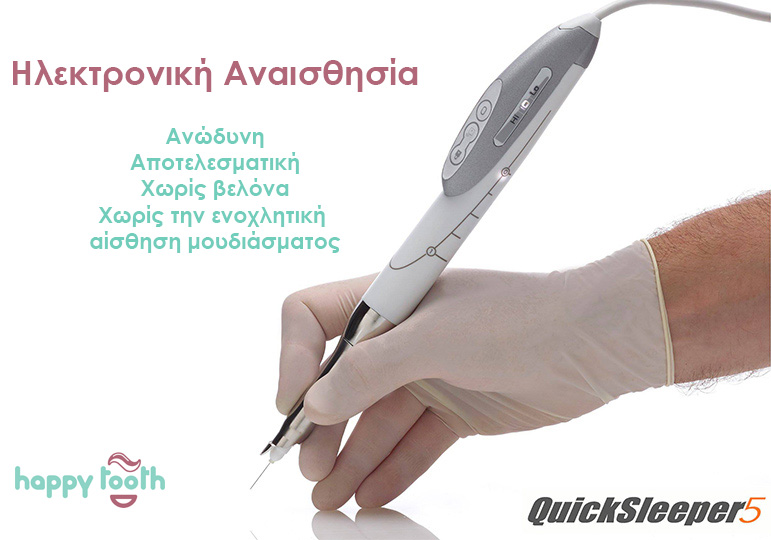
Electronic anesthesia is based on the technique of intraosseous anesthesia.
This means that the anesthetic is delivered directly into the center of the cancellous (spongy) bone, ensuring fast and effective action.
Electronic anesthesia offers multiple benefits for both children and parents:
Quick Sleeper electronic anesthesia is the most suitable method for children for the following reasons:
Yes, electronic anesthesia is completely safe and has been approved for use in children. The technology has been tested in university hospitals worldwide.
No, the procedure is painless. The thin needle and the controlled injection rate ensure that the child will not feel pain.
The anesthesia takes effect immediately and its duration is sufficient to complete the dental treatment, without leaving a feeling of numbness afterward.
Yes, electronic anesthesia can be used in most dental treatments, making it ideal for a variety of procedures.
Explain to your child that they will be visiting a friendly dentist who will help them have healthy teeth without pain. Avoid mentioning the word “injection” or “needle”.
At the Happy Tooth Dental Clinic for Children & Teens, our goal is to offer children a pleasant and painless dental care experience.
The use of Quick Sleeper electronic anesthesia allows us to eliminate the fear and anxiety, laying the foundations for healthy teeth and a positive attitude toward dental care.
Note: The information contained here is intended to be general in nature. Please contact us for advice.